
Late October in Vermont is when roofing decisions get urgent. The leaves are down, the gutters need attention, and everyone has the same thought: get the roof done before winter. It’s a sensible instinct. But there is a detail about asphalt roofing that most homeowners never hear until it matters: a new shingle roof isn’t finished when the last nail goes in. It still has to seal.
If you’re weighing ashpat shingles in South Burlington, understanding that sealing process helps you ask better questions and pick the right timing. Contractors like Blue Sky Roofing, a family-owned Vermont company that installs asphalt, metal, cedar and synthetic slate roofs, can explain how they handle it. Here is the science behind it, starting with what a shingle is made of.
Dissecting a Shingle: Four Layers
The Insurance Institute for Business & Home Safety (IBHS) explains the construction in its Roof 101 guide to asphalt shingles. A typical shingle has four working parts:
- Granules. Coated rocks on top that protect the shingle from damaging UV rays and provide color.
- Asphalt. An oxidized layer that sheds water and holds the granules in place.
- Fiberglass mat. The center layer, often called the base, which helps the shingle meet a Class A fire rating.
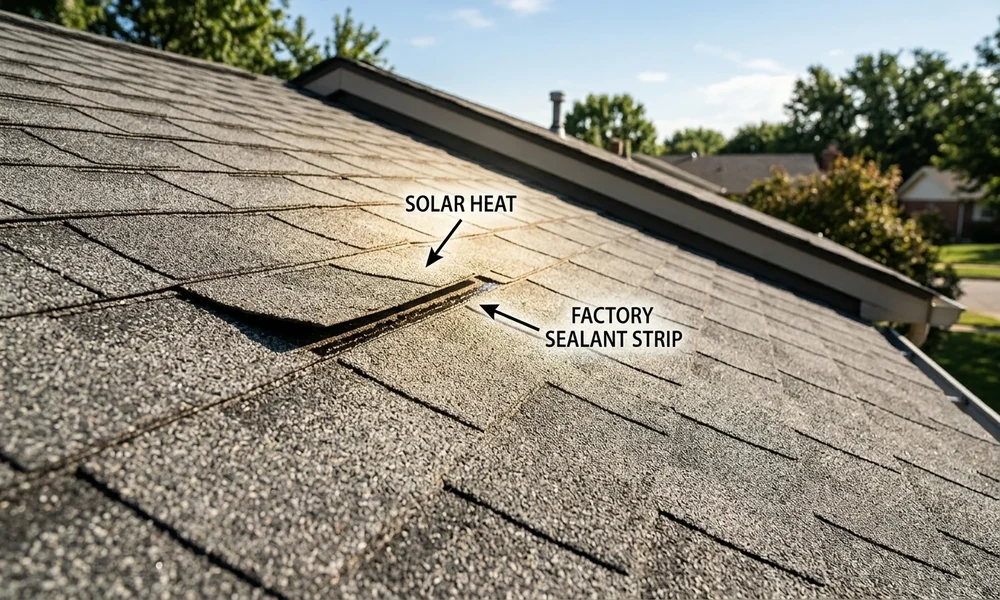
- Sealant. A softer asphalt that activates under the heat of the sun to self-seal the shingles together after installation.
That last layer is the one that matters this time of year.
Asphalt Is a Thermoplastic (and That Changes Everything)
IBHS points out that asphalt is a thermoplastic material: it softens when heated and hardens when cooled. Roofing asphalt is also harder and more brittle than the asphalt used in pavement, and the limestone filler used to strengthen shingles can make it more brittle still.
In practice, that means shingles behave differently in a Vermont January than in a July heat wave. Warm shingles are flexible and bond. Cold shingles are stiff and don’t.
The Sealing Clock
When shingles are installed, the tabs rest against the sealant strip on the shingle underneath. According to IBHS, the roof then needs time to seal. The sealant is a temperature-activated adhesive applied at the factory, so the sun’s warmth has to trigger it.
IBHS spells out the stakes and the conditions:
- Before sealing, the roof is vulnerable. Until shingles are fully sealed, wind and rain pose a risk. Wind can lift unsealed shingles, and water can seep underneath.
- Ideal temperatures are 70°F to 80°F. Manufacturers recommend that range for sealing and warn that temperatures below 40°F may not allow shingles to seal properly.
- Timing varies widely. In summer warmth, a roof can seal in as little as one to two weeks. Under less-than-ideal conditions, it can take one to two months or more.
Even the rated wind performance depends on this step. IBHS notes that the wind resistance of asphalt shingles is directly related to the sealed shingle’s ability to resist uplift from the shingle below, and the ASTM wind tests evaluate new products and do not account for weathering, temperature or aging.
What This Means for a Vermont Calendar
Vermont’s weather doesn’t always cooperate with those numbers. Use this as a planning guide, and let your contractor refine it based on the forecast:
| Timing | Sealing conditions | What to consider |
|---|---|---|
| Early to mid fall | Often still warm enough on sunny days | A good window if the schedule allows |
| Late fall | Frequently near or below 40°F | Ask how the contractor will handle sealing |
| Winter | Rarely warm enough for natural sealing | Discuss whether repair now and replacement later makes sense |
| Spring | Warming trend improves conditions | Often a strong time for full replacement |
This is why a reputable roofer talks about sequencing, not just scheduling. A roof installed in cold weather may sit unsealed until spring warmth arrives, which leaves it more exposed to wind and wet.
Questions to Ask If Your Roof Goes On Late
If timing or damage means your project can’t wait, ask:
- How will you handle sealing in cold weather, and do you follow the manufacturer’s cold-weather instructions?
- What will protect the roof while shingles are unsealed?
- Is the installation pattern, nailing and starter strip detail being done exactly to the manufacturer’s specifications? IBHS notes shingles typically need at least four nails per full-size strip, with instructions printed on the wrapper.
- Will you check back in spring to confirm the roof has sealed?
- What does the warranty say about installation conditions?
Choosing the Shingle Itself
IBHS describes three common types: 3-tab shingles, which are single layer with the sealant strip on top; architectural shingles, a thicker double-layer product with the sealant typically on the back; and designer shingles, which use more layers and are often styled to resemble slate or wood shake.
IBHS also explains that impact-resistant shingles are made by adding a reinforcing scrim or using polymer-modified asphalt, which gives greater flexibility against hail impacts.
Working With a Local Roofer
Blue Sky Roofing is a family-owned company that says it has been roofing for 22 years across Vermont, northern New York and New Hampshire. It lists GAF and CertainTeed certified installer status and NRCA membership, and its portfolio includes recent Burlington-area asphalt shingle projects. You can reach the team at (802) 862-1500.
The Takeaway
A shingle roof is finished only when it has sealed, and sealing depends on warmth. Before you commit to a date, ask when the roof will seal, what protects it until then, and whether waiting for better conditions would serve you better. In Vermont, that question can save a roof.