
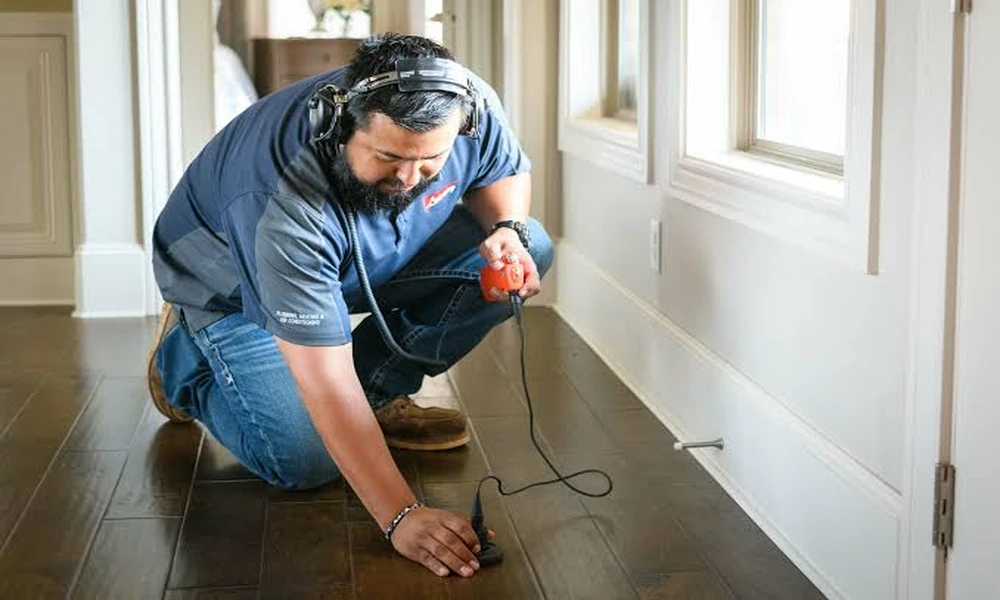
In a desert city, wasting water feels wrong, yet most homes are doing it right now without anyone noticing. A slow leak does not announce itself. It hides behind a toilet tank, under a sink, or in a sprinkler line, and it shows up months later as a swollen water bill or a stained ceiling. Many homeowners only call a plumber in Las Vegas after the damage is done, but a 10-minute investigation can catch most leaks early. Think of this as a case file: gather clues, test the suspects, and know when to bring in an expert.
Case File: Why It Matters
According to the EPA WaterSense program, the average household loses more than 9,300 gallons of water to leaks every year, and about nine percent of homes leak 50 gallons or more per day. The agency also notes that fixing easy household leaks can cut a water bill by roughly 10 percent. Those are not dramatic floods. They are quiet drips that add up.
Clue 1: Read Your Bill
Start with the paperwork. Compare your water use in a cooler month, when you are not running sprinklers or filling a pool, against what you would expect. The EPA suggests that a family of four using more than 12,000 gallons in a winter month may have a serious leak. If your usage creeps up with no change in habits, something is leaking.
Clue 2: The Meter Test
This is the most reliable check you can do yourself.
- Turn off every faucet, appliance, and irrigation timer so no water is in use.
- Write down the meter reading, or note the position of the small leak indicator.
- Wait two hours without using any water.
- Check the meter again.
If the reading changed at all, water is escaping somewhere. If you have a leak indicator that spins with everything off, that is a strong sign as well.
Suspect 1: The Toilet
Toilets are the most common culprit, and the leak is usually silent. A worn flapper lets water seep from the tank into the bowl without a sound.
To test it, add a few drops of food coloring to the tank and wait 10 minutes without flushing. If color appears in the bowl, you have a leak. Flush right afterward so the dye does not stain the tank. The EPA recommends checking flappers regularly and replacing them at least every five years. It is a cheap part and often an easy fix.
Suspect 2: Faucets and Showerheads
Look for moisture around handles, gaskets, and the pipe fittings under each sink. Wet cabinet floors, warped wood, or a musty smell are all red flags.
The numbers are bigger than most people expect. The EPA says a faucet dripping once per second wastes over 3,000 gallons a year, and a showerhead dripping 10 times a minute wastes more than 500 gallons. Tightening the showerhead connection and adding plumber’s tape fixes many simple cases. A shower valve that drips when the water is off usually needs a professional.
Suspect 3: Outdoor Lines and Irrigation
Desert landscaping often depends on drip lines and sprinklers, and those are easy to forget. According to the EPA, an irrigation leak the size of a dime’s thickness can waste about 6,300 gallons a month. Walk your yard while the system runs and look for:
- Soggy patches or unusually green spots
- Geysers or misting from broken heads
- Pooled water near the foundation or along the sidewalk
- Hoses and spigots that drip at the connection
Also check the hose bib by the house. A cracked washer or loose connection is a common, easy leak to miss.
Suspect 4: The Hidden Ones
Some leaks never show up on a test. Warning signs of a leak inside walls, under the slab, or in a buried line include:
- Water stains, bubbling paint, or peeling wallpaper
- Warm spots on the floor, which can point to a hot water line leak
- The sound of running water when nothing is on
- Cracks in walls or flooring, or a sudden drop in water pressure
- A meter that keeps moving even after you have ruled out toilets and faucets
What to Do While You Wait for Help
If you suspect a serious leak, shut off the main water valve and learn where it is before an emergency happens. Move belongings away from wet areas, take photos for insurance, and run fans to limit moisture damage. Mold can begin to grow quickly in damp spaces, so do not wait.
When to Call a Professional
DIY testing is a great first step, but some jobs need training and equipment. Call a licensed plumber if:
- The meter moves after you have checked every fixture
- You find stains or damp spots with no visible source
- The leak is in a wall, ceiling, slab, or underground line
- Pipes are old, corroded, or repeatedly leaking at joints
- A repair keeps failing or the fixture needs replacement
The EPA also points out that when leaky fixtures cannot be repaired, replacing them with WaterSense labeled models can improve efficiency and save money on utility bills.
Case Closed
Leaks are easy to ignore because they are quiet, but they are also easy to catch if you know where to look. Read your bill, run the meter test, check the toilet with dye, and walk the yard. Fixing small problems now costs far less than repairing the damage they cause later, and it keeps precious water out of the drain.