
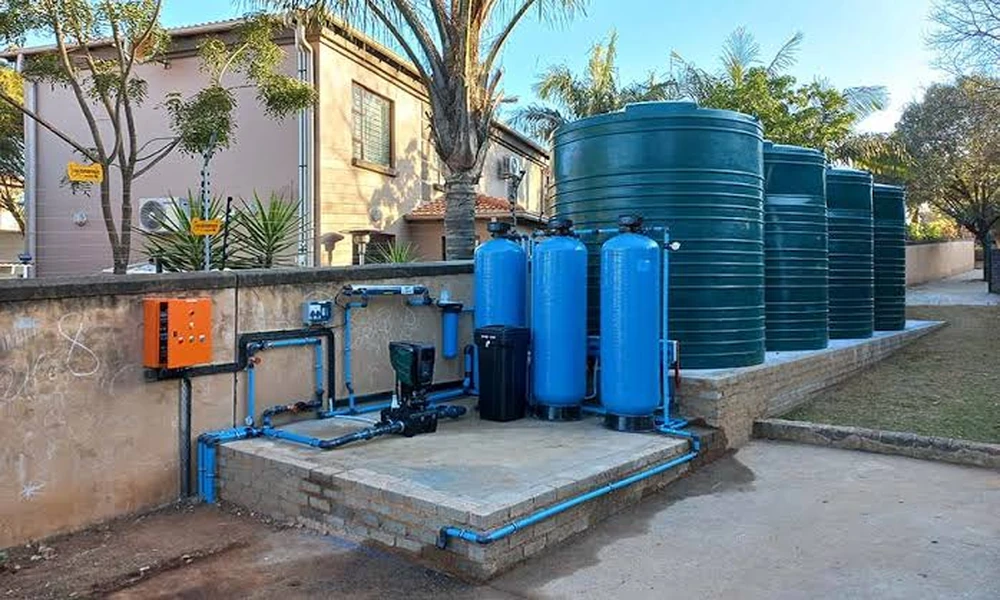
A borehole is only as useful as the pump that brings its water to the surface. For UK homeowners and agricultural properties relying on private groundwater supply, the pump is the single component with the greatest bearing on whether the system delivers consistent pressure and flow over decades of service, or becomes a recurring source of frustration and repair costs.
Specifying the right pump requires understanding several interconnected factors specific to each borehole, and getting any one of them wrong tends to surface as a problem within the first year or two of operation. This guide covers what to consider when specifying a pump for a private borehole supply.
Borehole Diameter Sets the Physical Constraint
The internal diameter of the borehole casing is the first and most fundamental limit on pump selection. Submersible borehole pumps are manufactured in standard diameters, with 3 inch and 4 inch being the most common for UK domestic and small agricultural boreholes, and larger diameters used for higher output commercial and irrigation applications. A pump cannot be specified without first confirming the actual internal casing diameter, measured directly rather than assumed from the borehole’s original drilling specification, as casing diameters are sometimes reduced by liners or sediment build up over time.
Matching Flow Rate to Actual Demand
The pump’s flow rate must be matched to the property’s peak water demand, which means accounting for the realistic scenario of multiple taps, appliances, and any outdoor irrigation running simultaneously rather than average daily consumption. Undersizing the pump for peak demand results in poor pressure when multiple outlets are in use; oversizing wastes energy and can contribute to excessive cycling if the rest of the system is not designed to absorb the higher flow.
For larger agricultural properties or installations supplying both domestic use and irrigation, the combined peak demand of both purposes must be calculated together, as this scenario frequently produces a higher peak than either use considered in isolation. A range of borehole and well pumps across multiple diameters and flow capacities allows the pump to be matched precisely to calculated demand rather than approximated.
Total Head: The Most Commonly Underestimated Factor
Total head combines the vertical distance from the water level in the borehole to the highest point of use, plus the friction losses through the rising main and any pipework between the pump and the property. Both elements must be calculated accurately, because a pump’s published flow rate is only achieved at the specific head for which that figure is quoted. A pump that appears to offer ample flow at the manufacturer’s headline figure may deliver considerably less once the actual head of the installation is factored in.
Static head should be calculated using the pump’s anticipated setting depth, not simply the depth to the current water table, since the pump is typically set well below the water table to allow for seasonal drawdown. Friction head depends on pipe diameter, length, and the number of bends and fittings in the rising main, and increases disproportionately if an undersized pipe diameter is used to save cost at installation.
Water Quality and Pump Material Selection
Not every borehole produces consistently clean water. Some sites yield water with sand, silt, or fine sediment content, particularly in the early period after drilling or where the aquifer formation includes fine particulate material. A standard clean-water pump will suffer accelerated impeller and seal wear in these conditions, with service life shortened dramatically compared to the manufacturer’s rated expectations. Pumps specifically rated to tolerate suspended solids at defined concentrations should be specified where any sediment content is present or suspected, and a water sample analysis before pump selection is a worthwhile investment for any new borehole installation.
Protection Features That Extend Pump Life
Several protection features have a meaningful impact on long-term pump reliability and should be considered standard rather than optional for any domestic or agricultural borehole installation:
- Dry run protection: a low-water cutoff or float switch that stops the pump before it runs dry, preventing the rapid overheating that occurs when a submersible motor loses its water cooling
- Pressure switch and vessel sizing: a correctly sized pressure vessel reduces pump cycling frequency, which directly extends motor and bearing life
- Overload and thermal protection: built-in motor protection that shuts the pump down before sustained overload conditions cause winding damage
- Surge protection: particularly relevant for pumps connected to overhead power supplies in rural locations prone to lightning-induced electrical surges
Frequently Asked Questions
What is the most common mistake when specifying a borehole pump?
Underestimating total head is the most frequent specification error, as buyers often size the pump against the borehole’s flow rate alone without properly accounting for the vertical lift and friction losses through the rising main and delivery pipework.
Can the same pump serve a house and an irrigation system?
Yes, provided the pump is sized to the combined peak demand of both uses operating simultaneously rather than either demand calculated in isolation, which typically requires a higher flow rate than either use alone would suggest.
How do I know if my borehole water contains sediment?
A water sample analysis taken after the borehole has been properly developed and flushed will identify any suspended solids content; persistent sediment in samples taken over several weeks indicates a pump rated for solids tolerance should be specified.
Is dry run protection essential for a domestic borehole pump?
Yes, dry run protection is one of the most cost-effective additions to any borehole pump installation, as the cost of the protection device is minor compared to the cost of a replacement pump motor damaged by running dry.
Final Thoughts
Specifying the right pump for a private borehole comes down to confirming the physical constraints of the casing, calculating actual peak demand and total head accurately, understanding the water quality the borehole produces, and incorporating the protection features that extend service life. Getting these decisions right at the outset is considerably less costly than diagnosing and correcting a poorly specified system after installation.
For homeowners, farmers, and contractors specifying or replacing borehole pumps, a specialist in submersible borehole and well pump systems can help confirm the correct specification against the actual conditions of any private water supply installation.